
Your child melts down at every haircut, dreads the dentist, or is about to start school and has no idea what a school day looks like. A social story is a short story you write for your child that walks them through that one situation before it happens, so it is less of a surprise.
A short story, written for one child, about one situation
A social story explains a situation to a child, and what the child can do in it. The Student Wellbeing Hub, which the Australian Government funds, describes it as a story that explains a situation, a skill, a problem or a concept, and how your child might deal with it. Each story is short and made for one child, with words and pictures about that child's own life.
You may also see the names social script, social narrative or story-based intervention. Education departments often say social narrative. They mean the same kind of story.
The approach comes from Carol Gray, an American teacher who began writing these stories for young autistic children in the 1990s. Raising Children Network notes that "Social Story" and "Social Stories" are her trademarks, and that her version follows 10 criteria. This page uses "social story" for the general idea that parents and teachers now use.
Sources: Student Wellbeing Hub (make a social story; starting school for autistic students); Raising Children Network (social stories); Queensland Department of Education Autism Hub (social narratives); City of Mandurah (how to write a social story).
Who social stories can help
Social stories were first developed for autistic children. Raising Children Network says they are also used with children who have learning difficulties or an intellectual disability. Australian sources name these uses:
- Getting ready for a new place or event, such as the dentist, a haircut or a party
- Changes to routine and unexpected events
- Starting preschool or school
- Worries about social situations, such as joining a game or sharing
- Learning a skill, such as waiting for a turn
The City of Mandurah's guide says anyone who is nervous about a place or event for the first time may benefit. The NSW Department of Education designed its starting-school stories to be adapted for all children.
Raising Children Network says social stories might be less useful for children who find it hard to understand language. For a preschooler, Queensland's Autism Hub suggests simple text, clear photos, and checking that your child understands.
If you are worried about your child's development, you do not need to wait. NSW Health's advice is to act early when you have a concern. If your child stops doing something they could do before, such as using words or playing in a way they used to, see your GP soon.
Sources: Raising Children Network (social stories); City of Mandurah (how to write a social story); NSW Department of Education (starting school social narratives); Queensland Department of Education Autism Hub (social narratives); NSW Health (learn the signs, act early).
What the research says
Raising Children Network rates social stories for autistic children as promising. On its scale, that means some research shows positive effects, but more research is needed. It also says most studies are small. Queensland's Autism Hub uses a different label: it says recent systematic reviews list social narratives as an established evidence-based practice, based largely on single case design studies, after a history of mixed evidence.
Two more points from the sources matter for parents. A story works best when it fits your child and is used at the right time. And it is one support among several. A NSW Department of Education guide on visuals says a social story on its own is unlikely to change how a child interacts with others, but it helps every adult around the child use the same words.
Sources: Raising Children Network (social stories; therapies guide ratings); Queensland Department of Education Autism Hub (social narratives); NSW Department of Education (tips for visuals).
How to write a social story in seven steps
- Pick one situation. One story covers one event, place or skill. If a day has several hard parts, write a story for each part.
- Find out what really happens. Talk to the teacher, dentist or hairdresser. Take photos of the place and the people, with their permission.
- Write at your child's level, with your child if you can. Use the words your child uses. Mostly write as "I" or "we". Avoid "you".
- Give it a title and a beginning, middle and end. Say who, where, when, what and how.
- Describe more than you direct. Most sentences say what happens and what other people think or feel. Fewer sentences say what your child can do. Use "may" and "might" for things that change, and write what your child can do, not what they must not do.
- Choose a format. A stapled booklet, a slide show on a tablet, or the Student Wellbeing Hub's blank template all work. The City of Mandurah guide suggests one to four sentences per page.
- Try it and share it. Read it with your child, ask a few questions to check they understand, and give a copy to grandparents, educators or anyone else who cares for your child.
Sources: Student Wellbeing Hub (make a social story); City of Mandurah (how to write a social story); Wyndham City (social stories tip sheet); Queensland Department of Education Autism Hub (social narratives); NSW Department of Education (starting school social narratives).
Example social stories you can adapt
These are EarlyBloom's own examples, written to the steps above. Change the details to match your child, the place and the people, and add your own photos.
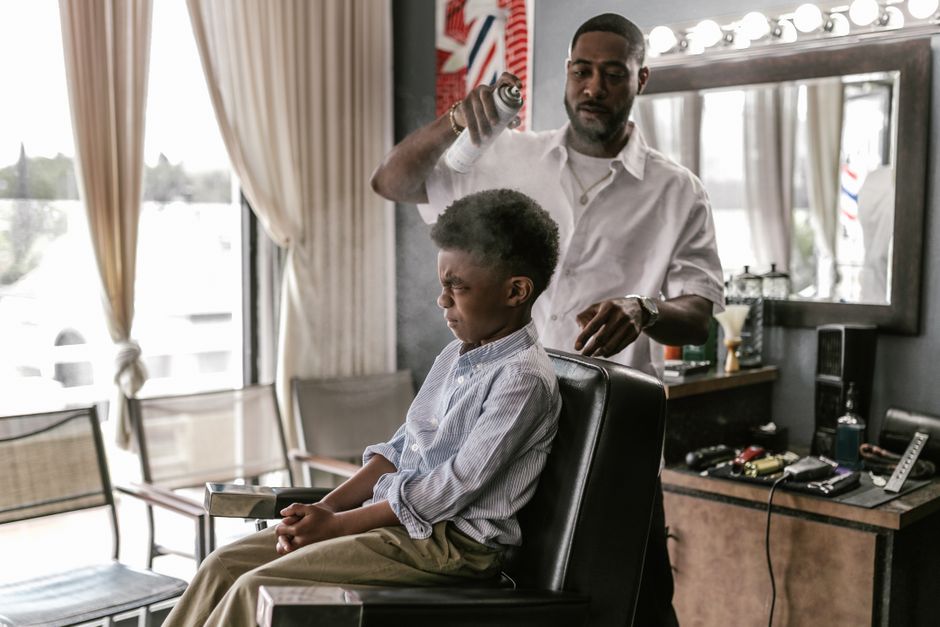
Getting a haircut
I am going to get a haircut on Saturday. Dad will drive me to the hairdresser. I sit in a big chair. The hairdresser may put a cape around my neck to keep hair off my clothes. The clippers make a buzzing sound. Some children like to hold a toy or wear headphones. When the haircut is finished, the hairdresser takes off the cape. I can look in the mirror at my new hair.
Going to the toilet
When I need to wee or poo, I go to the toilet. I pull my pants down and sit on the toilet. Sometimes it takes a little while. When I am finished, I wipe with toilet paper. I pull my pants up and flush. Then I wash my hands with soap and water. Mum or Dad may say "well done".
Keeping my hands safe
Sometimes I feel angry or frustrated. That is OK. Everybody feels angry sometimes. When I feel angry, I can squeeze my hands together, stamp my feet, or tell a grown-up "I am angry". Hitting can hurt other people. When I keep my hands safe, everyone stays safe. Grown-ups can help me when I tell them how I feel.
Sharing toys
At kinder there are lots of toys. Other children like to play with them too. Sometimes I have to wait for a turn. Waiting can feel hard. I can ask "Can I have a turn when you are finished?" My friend may say yes, or may want a little longer. When it is my turn, I can play with the toy.
For hitting, think about why it is happening before you write. The Australian Institute of Family Studies says behaviour, including behaviour that could hurt someone, is a form of communication. An autistic child who hits is often signalling an unmet need or a strong feeling, rarely an intent to hurt. A story can then describe that feeling and a safer way to show it.
Sources: Australian Institute of Family Studies (why some autistic children use potentially harmful behaviours); Queensland Department of Education Autism Hub (social narratives); NSW Department of Education (tips for visuals).
How to use a social story with your child
- Read it together at a regular time, and again just before the situation. Queensland's Autism Hub suggests reading stories regularly and especially in the lead-up to an event that may be hard.
- Start early for a planned visit. The City of Mandurah suggests about two weeks before visiting a new place.
- Read it aloud or record it if your child is not reading yet, so they can listen and look at the pictures.
- Check what your child understood, and talk about what might be different on the day.
- Read it again afterwards, to talk about what went well.
- Read it less often once your child understands the situation. If the situation changes, such as a new teacher or a different dentist, update the story.
Never use a social story as a punishment. The Student Wellbeing Hub says social stories are never used as a consequence for misbehaviour.
Sources: Raising Children Network (social stories); Queensland Department of Education Autism Hub (social narratives); City of Mandurah (how to write a social story); Student Wellbeing Hub (make a social story; starting school for autistic students).
Free Australian social stories and templates
- Starting school: the NSW Department of Education's starting school social narratives (opens in a new tab) are editable Word and PowerPoint stories, "My new school", that schools can tailor and share with families.
- Starting preschool: the NSW Department of Education's starting preschool social narratives (opens in a new tab) come in Word and PowerPoint, with translated versions in 15 languages.
- Writing your own: the Student Wellbeing Hub's starting school page for autistic students (opens in a new tab) has the make a social story guide (opens in a new tab), a blank template, and a ready-made story, "Getting ready for school in the morning", with a text-only version you can illustrate with your own photos.
- The doctor, dentist and blood tests: NSW Health's Agency for Clinical Innovation has free Say less, show more photo stories (opens in a new tab).
- The dentist: WA Health's Maggie goes to the dentist (opens in a new tab) is a photo story from its Special Needs Dental Clinic.
Sources: NSW Department of Education (starting school and starting preschool social narratives); Student Wellbeing Hub (starting school for autistic students); NSW Agency for Clinical Innovation (Say less, show more); WA Health (Maggie goes to the dentist).
When to involve a professional
You can write social stories yourself. Raising Children Network says an occupational therapist, psychologist or speech pathologist can also teach you how to write them, and advise how to use them with your child, for example read aloud, as a video, or for your child to read. It says a therapist's help with social stories might be covered by Medicare, or included in your child's NDIS plan. To find an OT yourself, Occupational Therapy Australia runs a Find an OT service (opens in a new tab) that lists certified occupational therapists by area.
Talk to a professional, or your GP, if a hard situation keeps causing distress, if behaviour is hurting your child or others, or if you are worried about your child's development. You do not need a set number of signs before you ask.
If your child hurts themselves or talks about wanting to die, get help the same day: call Lifeline on 13 11 14 or Kids Helpline on 1800 55 1800. If they are in immediate danger, call 000.
For more on early signs, see the guide to early signs of autism in toddlers, and signs of anxiety in children if worry is behind the hard moments. If your child is about to start school, learning difficulties in children covers the signs to watch in the first years.
Sources: Raising Children Network (social stories); Occupational Therapy Australia (Find an OT); NSW Health (learn the signs, act early).
Your next step
Choose the one situation that is hardest for your family this month, and write a short story about it this week with the steps above. If you would like help, the autism signs hub and the social difficulties hub bring together support for children, and the occupational therapy page explains what an OT does. When you are ready, find a children's occupational therapist near you.